Way Cafe
restaurant | Herttoniemi, Helsinki
The iconic Way Bakery in Kallio has opened its second location: the Way Café, situated in the picturesque Herttoniemi neighborhood, in the eastern suburbs of Helsinki.
The location was carefully chosen by the owners, as they felt East Helsinki was an area where many of their former Kallio customers had moved after starting families. The space previously housed the legendary restaurant Pikku Hukka, which offered fine dining in set menus.
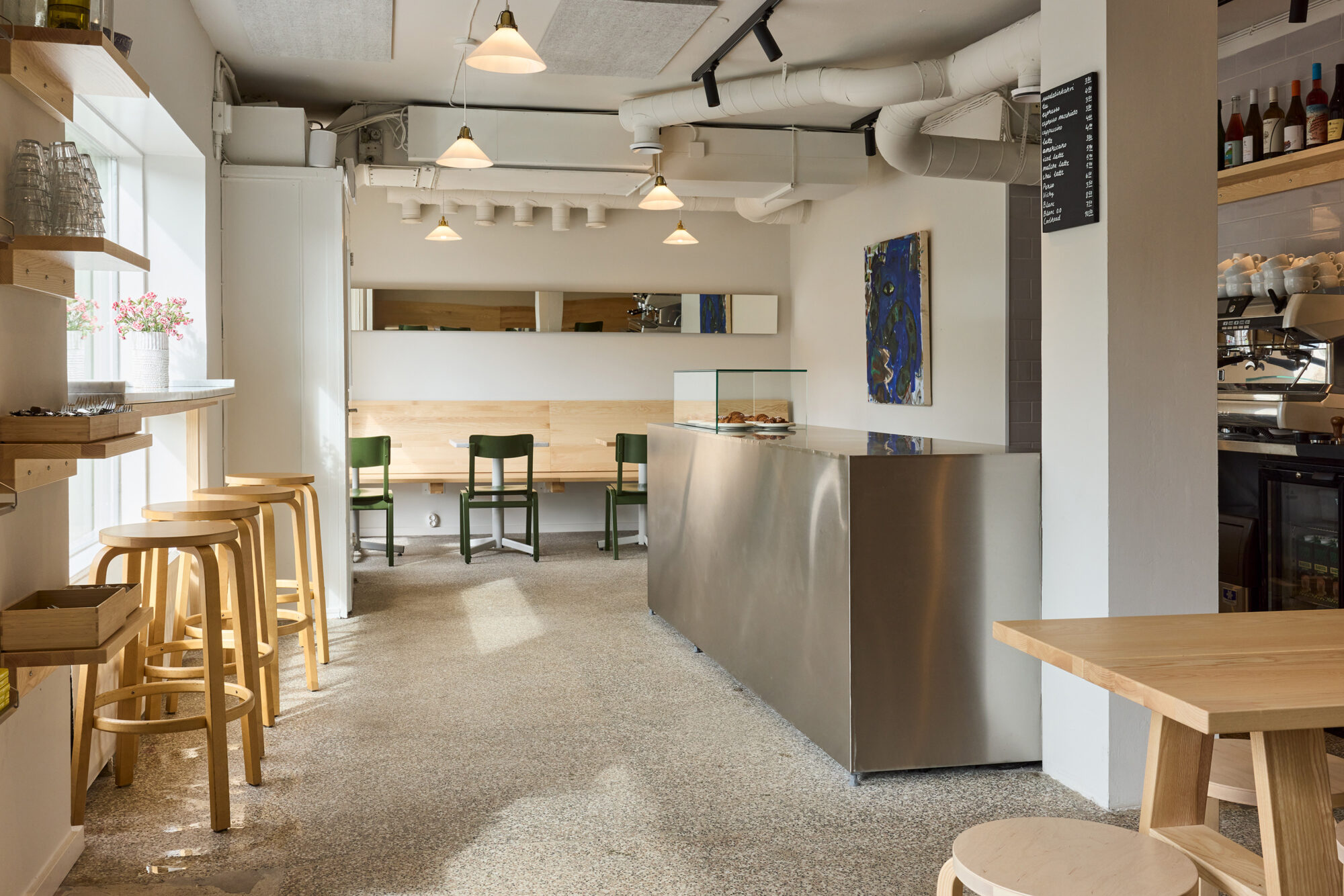
The task of transforming the interior from a dark, moody restaurant into a bright and airy café aligned with the Way brand was given to Studio Joanna Laajisto, who was also responsible for the design of the first location. The objective was to create a recognizable Way look—something familiar to customers in Kallio—while adapting it to the very different context of a 1950s suburban apartment building.
The renovation was carried out with minimal structural changes to reduce environmental impact and keep the budget under control. It was important that the work remained simple and efficient so the business could open as quickly as possible.
“We did not want a perfect and pristine outcome, so we didn’t try to fix everything. This was a very forgiving and fun approach to renovation,” explains Joanna Laajisto, founder of the design studio.
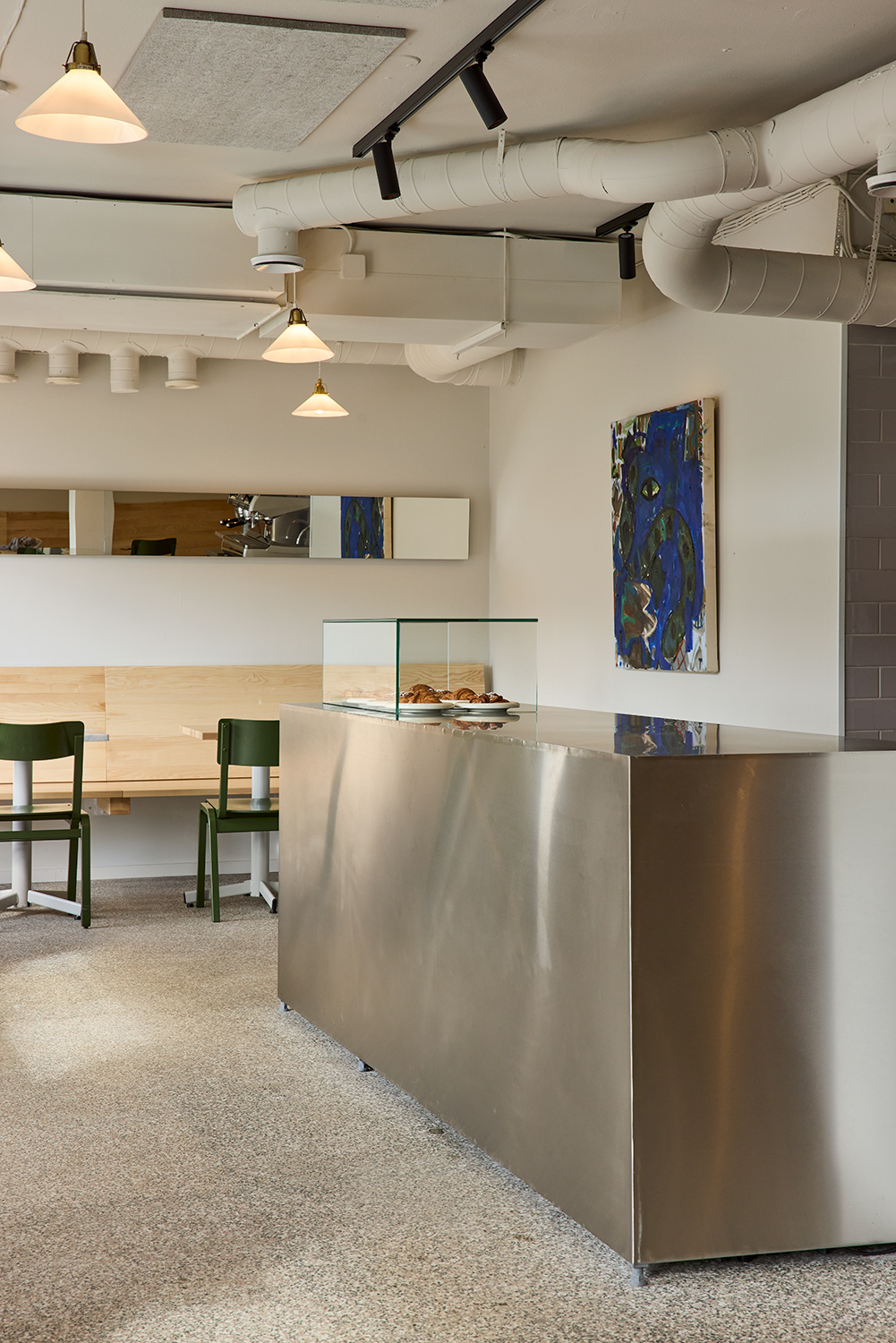
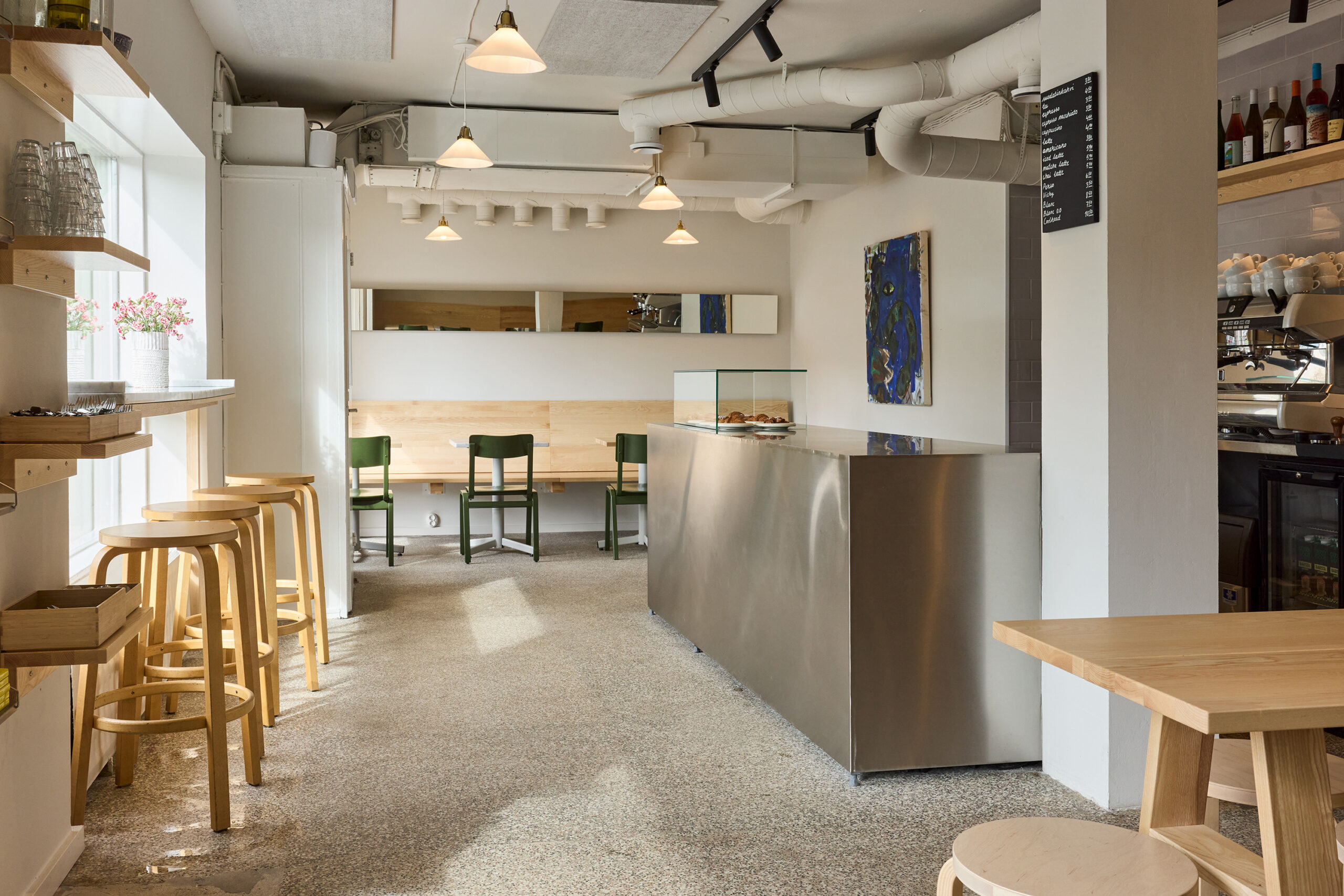
All existing air conditioning and electrical installations were kept as they were, which may appear somewhat rugged by some standards. The hanging glass shoemaker lamps were inherited from the previous owner, but by rearranging their layout, a completely new and modern atmosphere was created for the café.
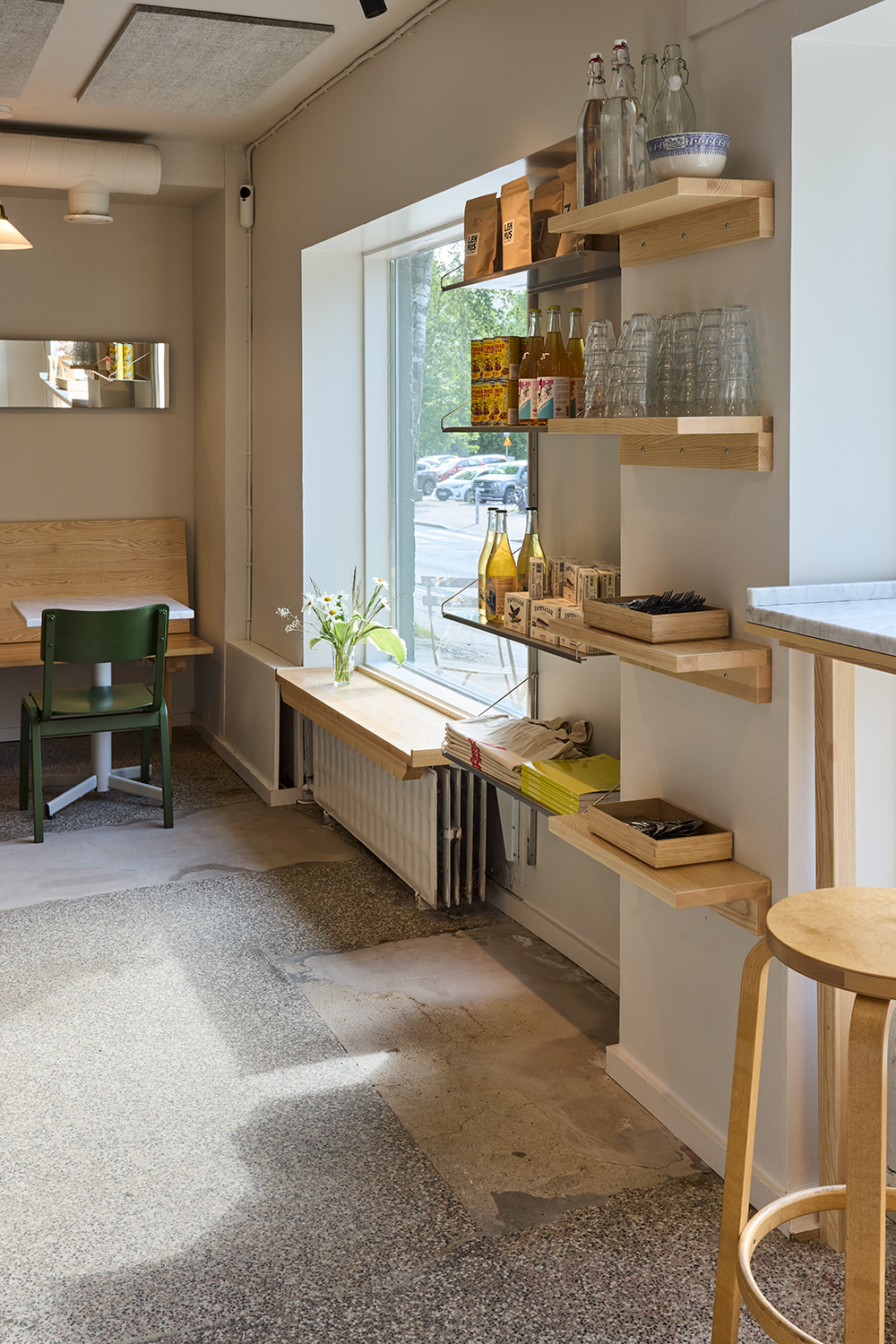
The wall tiles from the previous tenant were kept, but a fresh coat of soft white paint on the walls and ceiling transformed the space immediately. Beneath layers of old flooring, a beautiful original mosaic concrete floor was uncovered. Some areas were missing and had been patched with different materials from previous renovations, but these were left untouched.
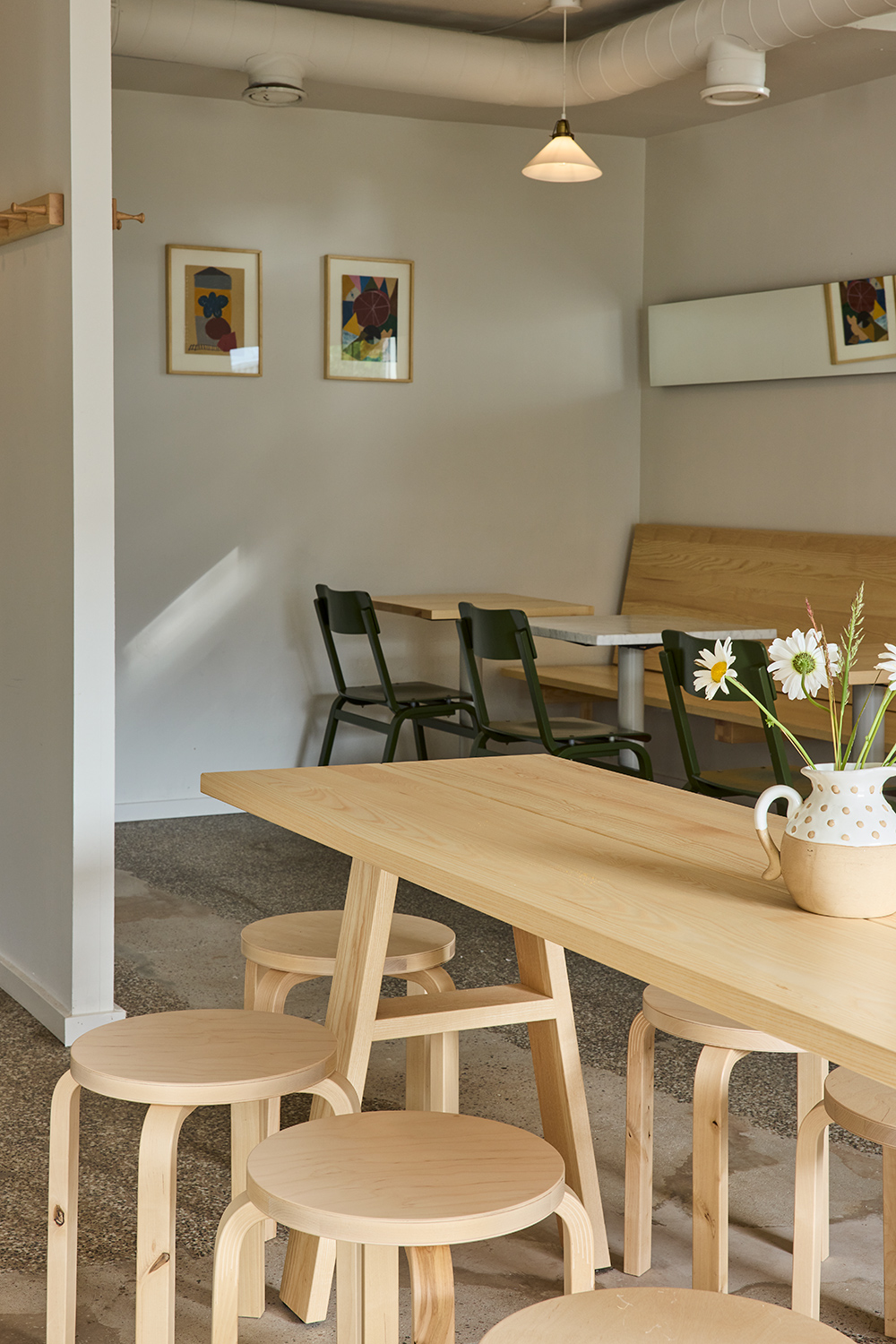
For the furnishings, custom solid ash wood benches and tabletops were crafted by a carpenter to echo the look of Way Kallio. These solid wood pieces had proven practical in the first location, being easy to maintain under heavy use and adaptable to changing needs. In fact, the existing furniture in Kallio had already been altered once as requirements evolved.
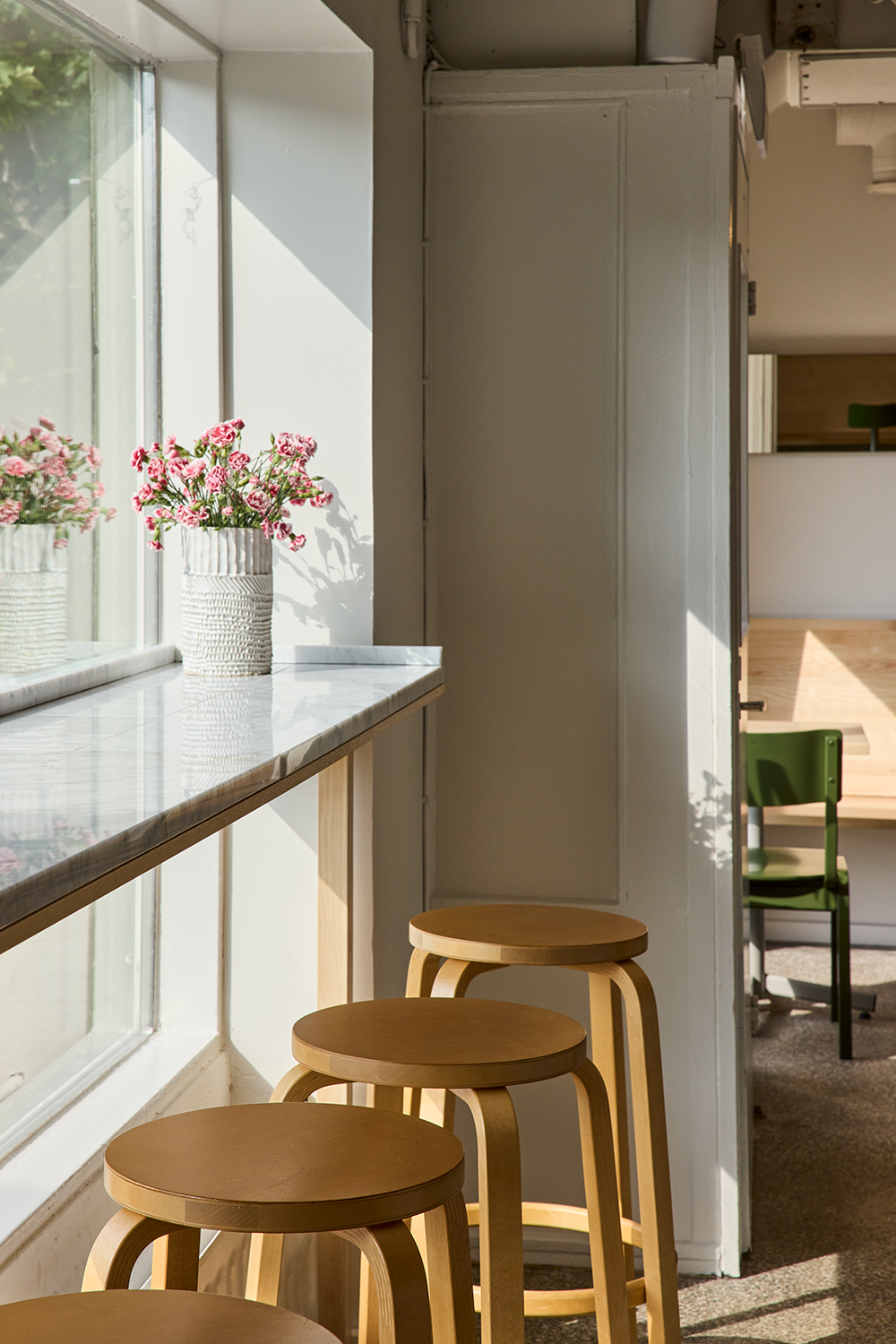
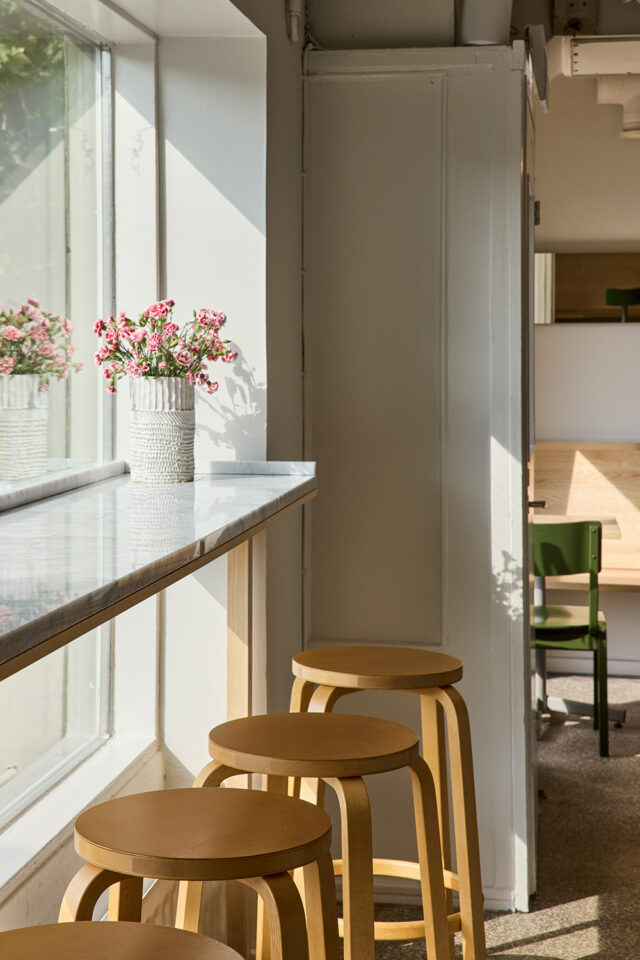
Most of the ancillary furniture was sourced secondhand. “We used what was available at the time and made the most out of it,” says Laajisto. Old school chairs, found in the owners’ storage, were given new life with mossy green paint. The Artek stools in honey-stained birch wood by the window came from the owners’ other restaurant. They may not perfectly match the café’s light ash wood, but perfection was never the goal—the focus was on making use of available resources.
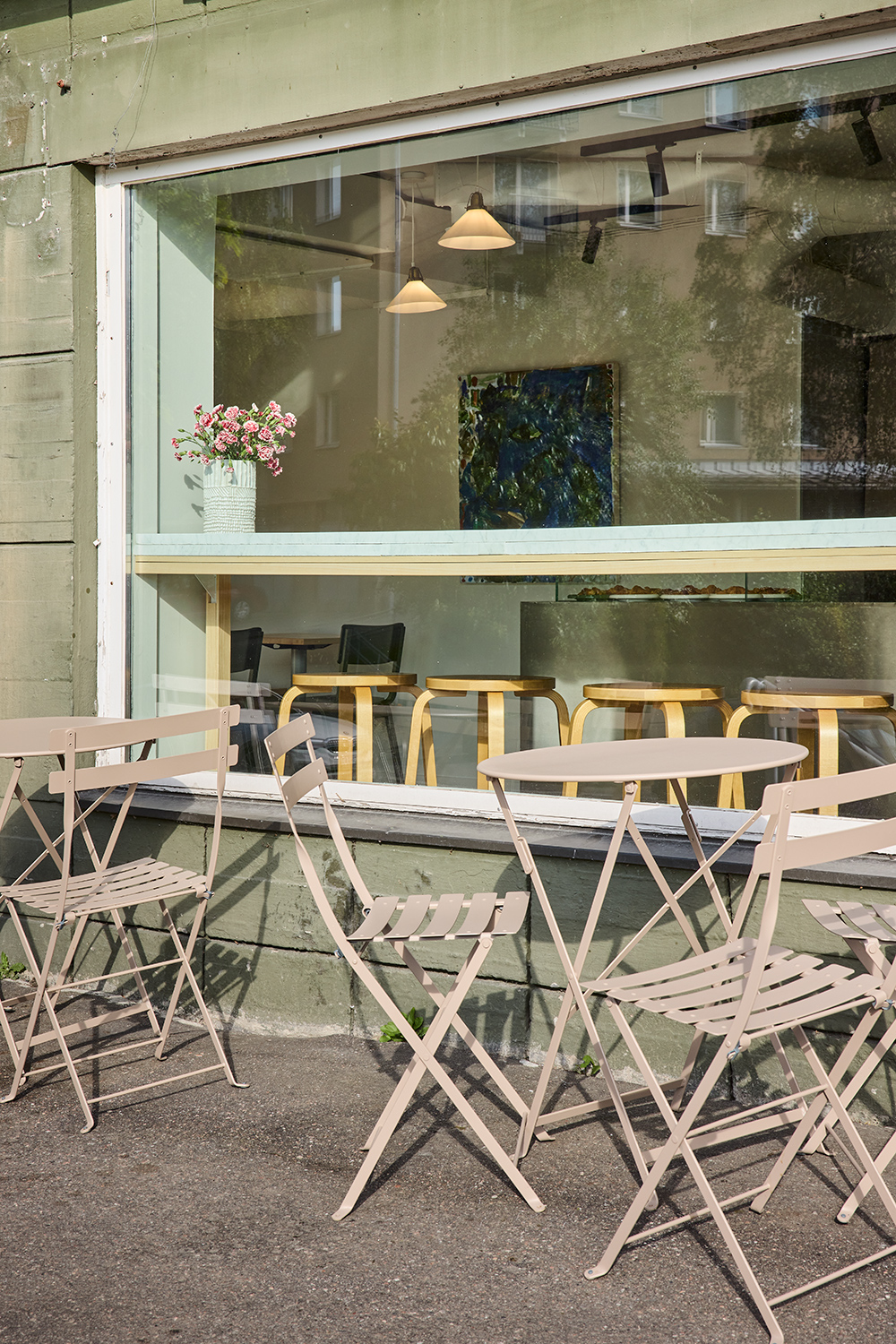
Only the “wild birch” Artek stools around the long communal table, along with the Fermob bistro outdoor furniture, were purchased new. The owners knew these would be reused across their restaurants for years to come. The colorful artwork is by a friend, the renowned artis Tuukka Tammisaari.
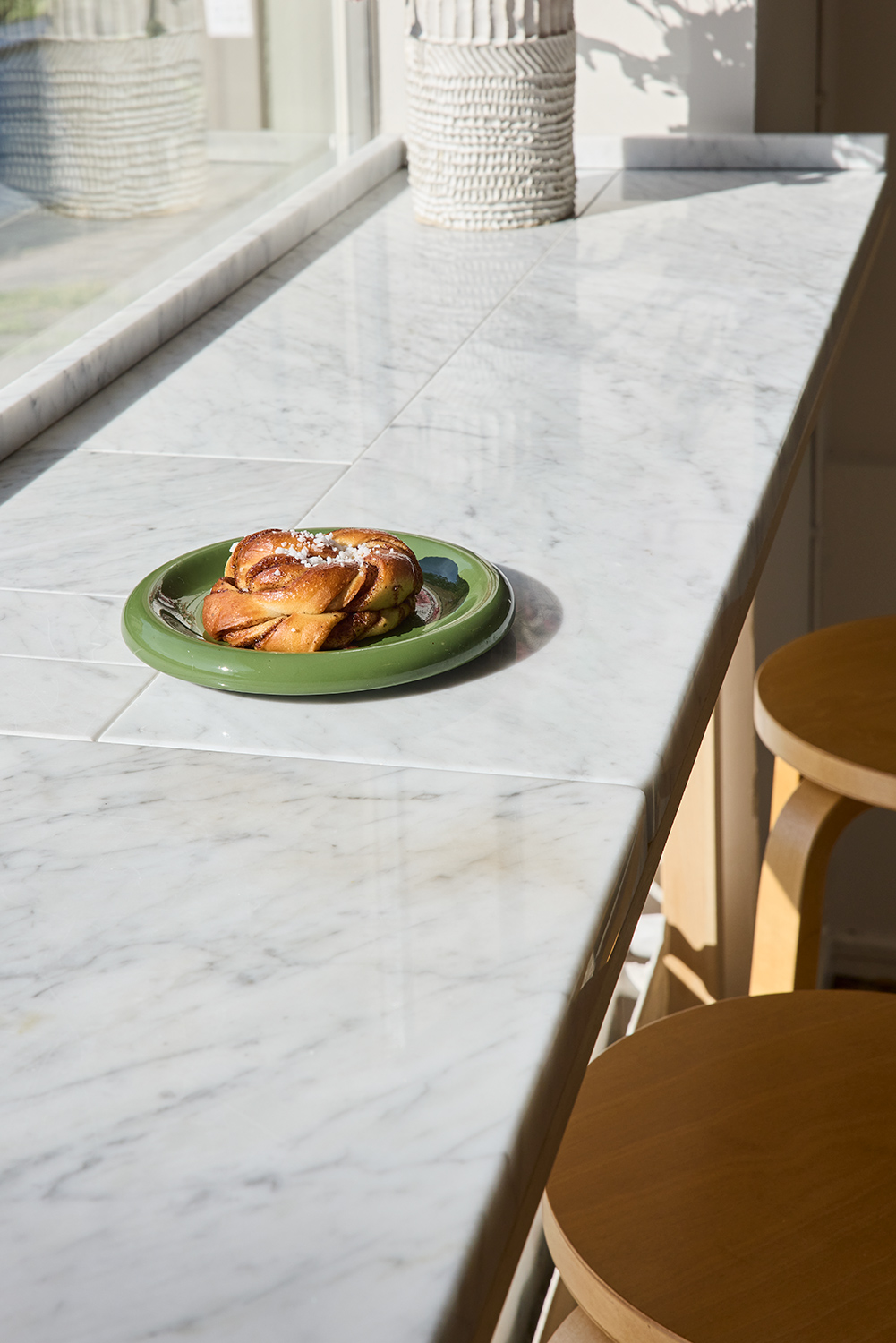
The marble for the counter by the window and several tabletops was also sourced secondhand. It was cut and assembled to fit the café’s needs, requiring extra effort and resulting in more seams than usual. However, the existing patina and unique story added richness to the final result.
“With this kind of approach—where existing structures and secondhand resources dictate much of the outcome—I’ve had to completely reevaluate my design process as well as aesthetics. Previously, working on large-scale commercial projects such as hotels and office buildings, I was accustomed to designing from a blank canvas: specifying everything in detail beforehand, which often meant excessive demolition so the outcome would match our initial illustrations exactly. Now, much of the design happens on site and evolves as layers of history are revealed and as materials and fixtures are found. The process is far from perfect, and we’re still learning from one project to the next. But there is so much that can be done to create beautiful and meaningful spaces that also respect the earth’s carrying capacity,” Laajisto reflects.