Eteläranta 6 / AD Museum
events & exhibition | Helsinki
Eteläranta 6 designed according to circular economy principles
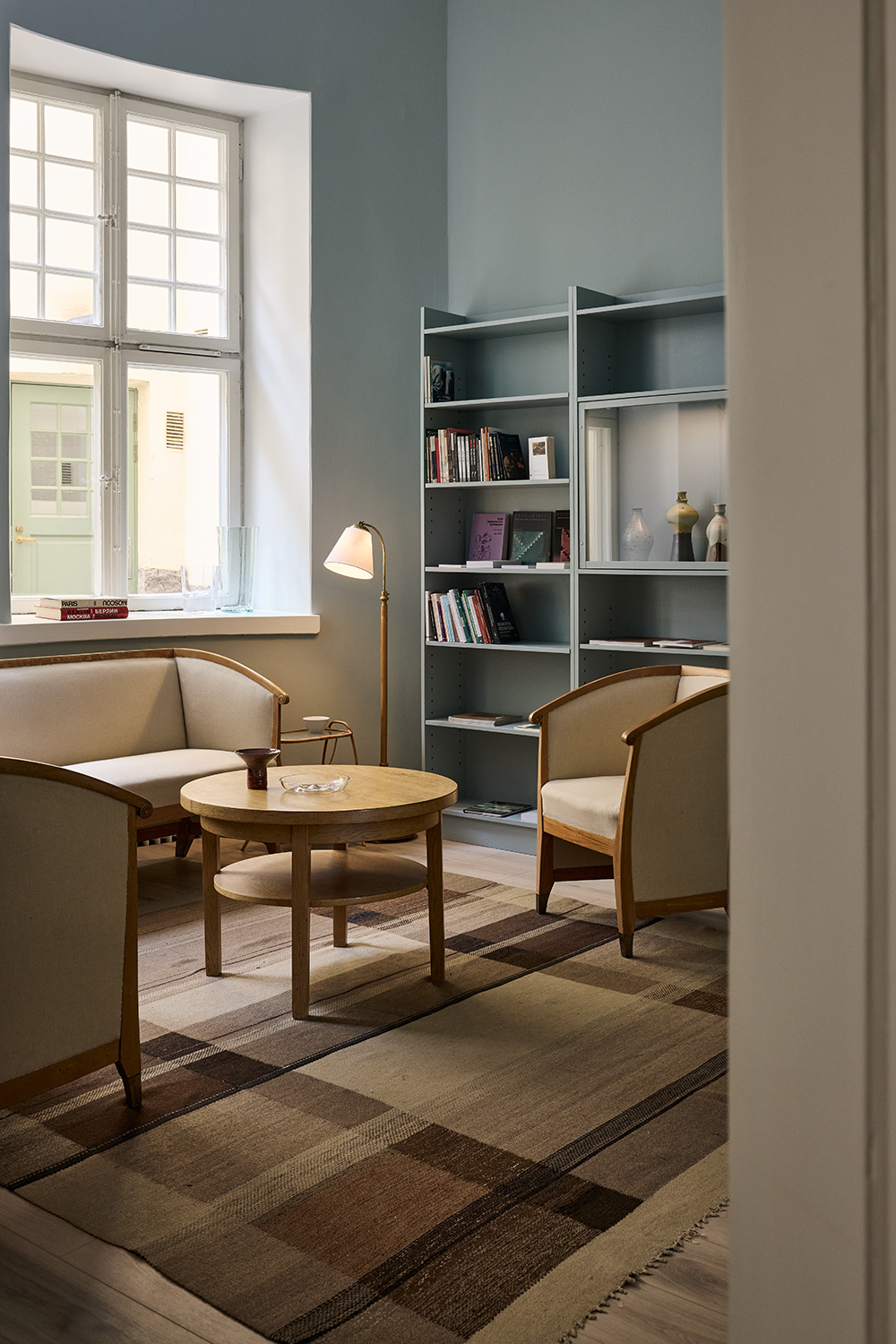
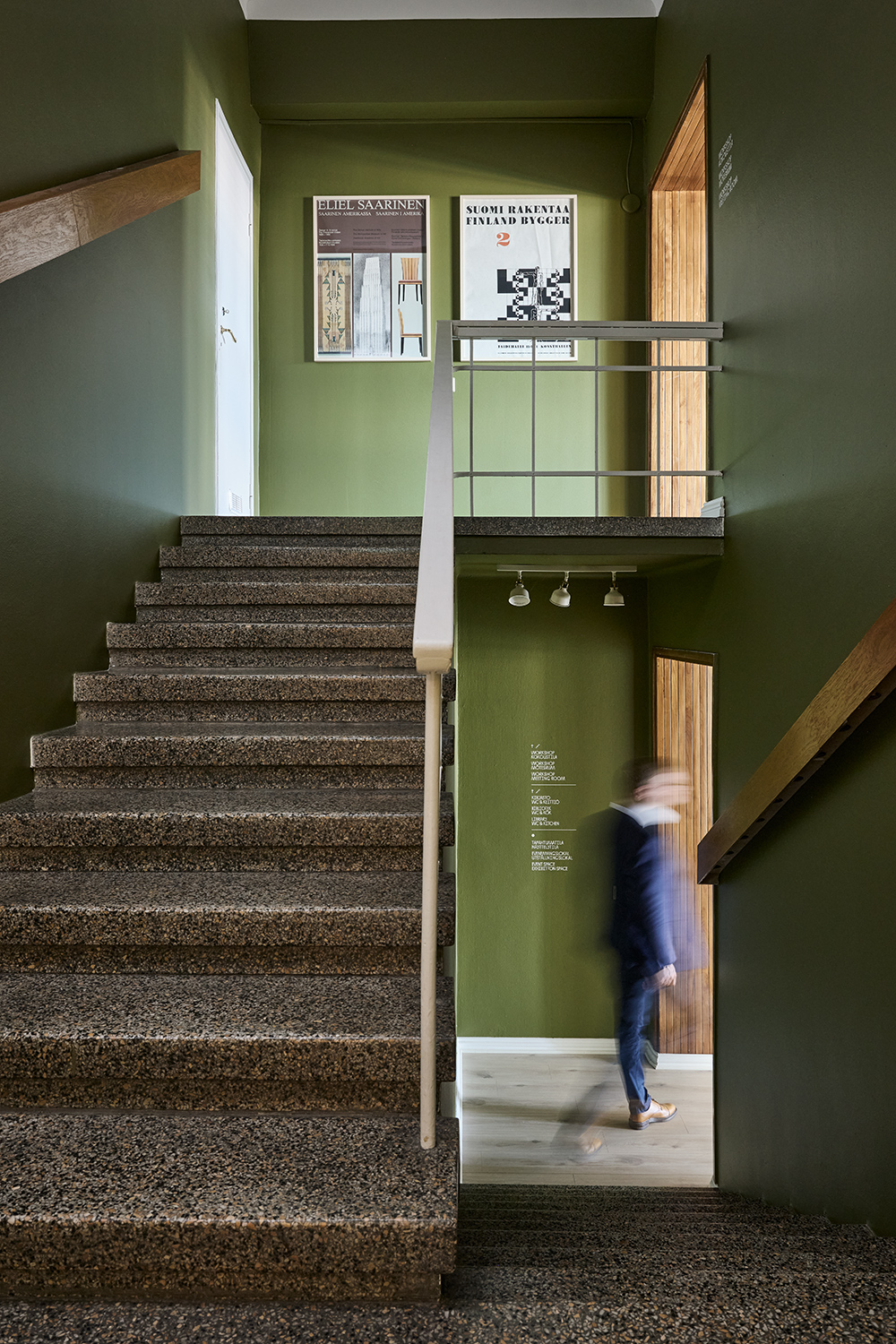
The Architecture & Design Museum Helsinki has transformed a historic Jugend apartment in Helsinki’s South Harbour into a temporary space for encounters, dialogue, and experimentation. Eteläranta 6 is located in a Jugend (Finnish Art Nouveau) building designed by architect Mauritz Gripenberg and completed in 1904.
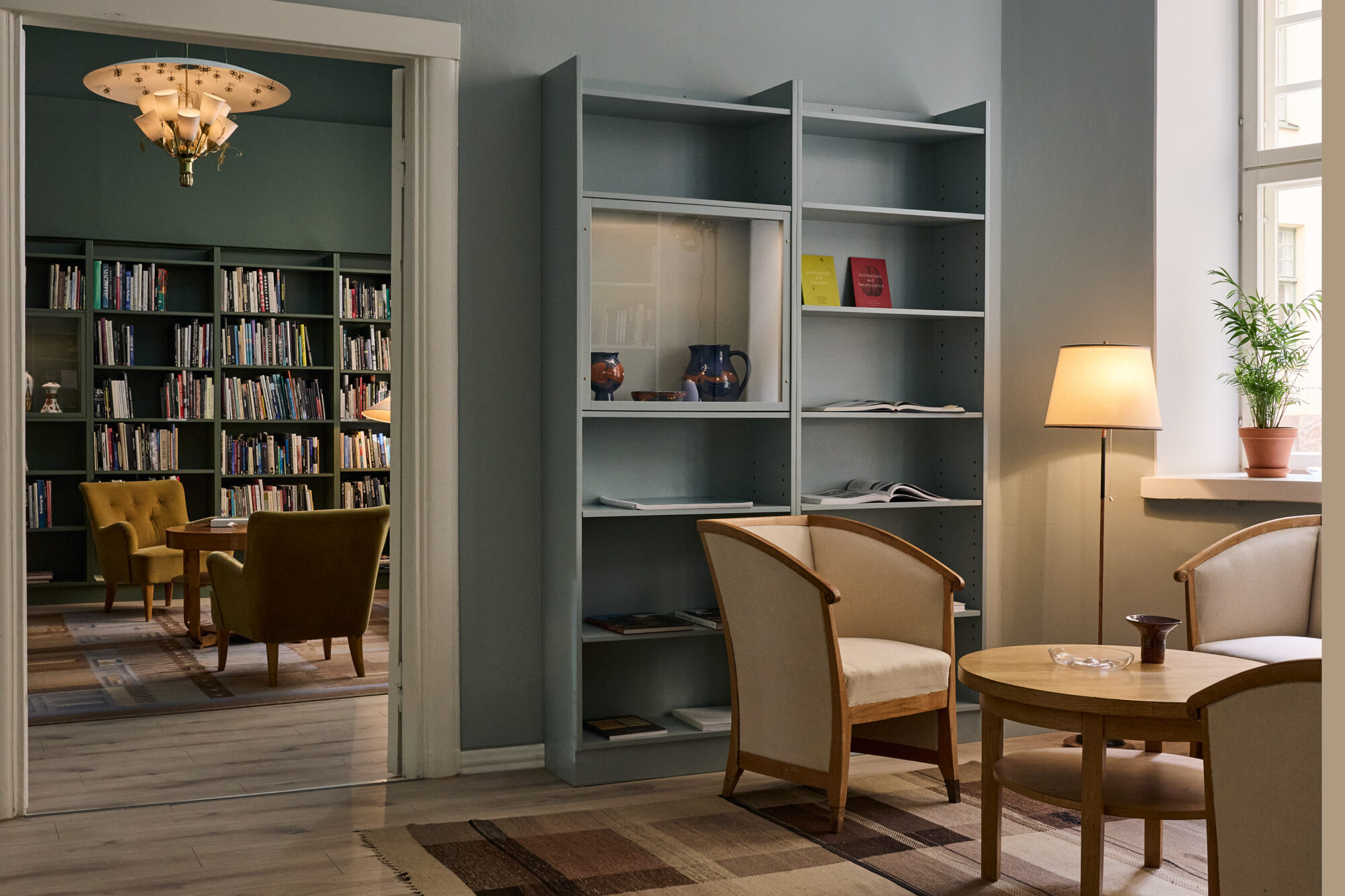
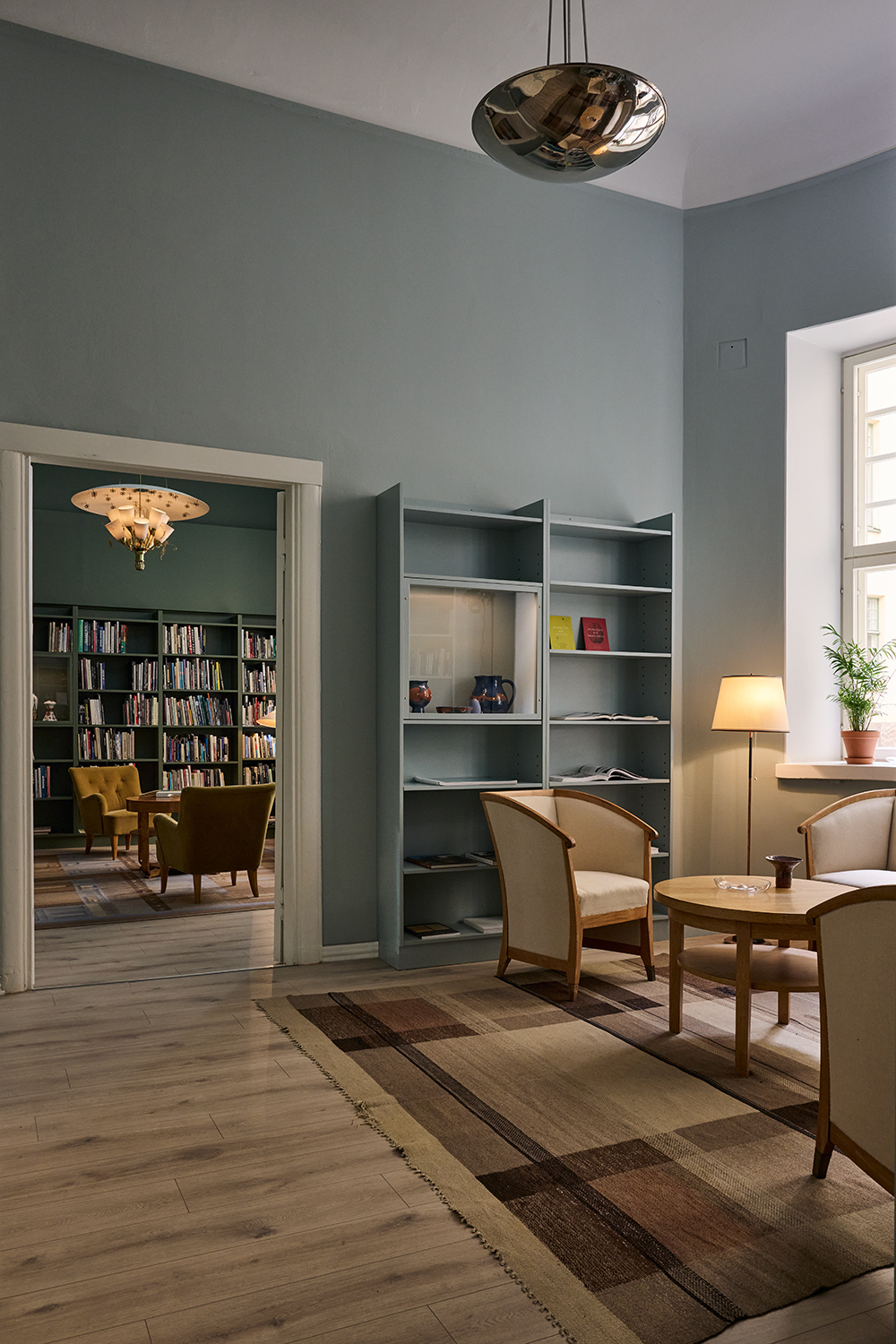
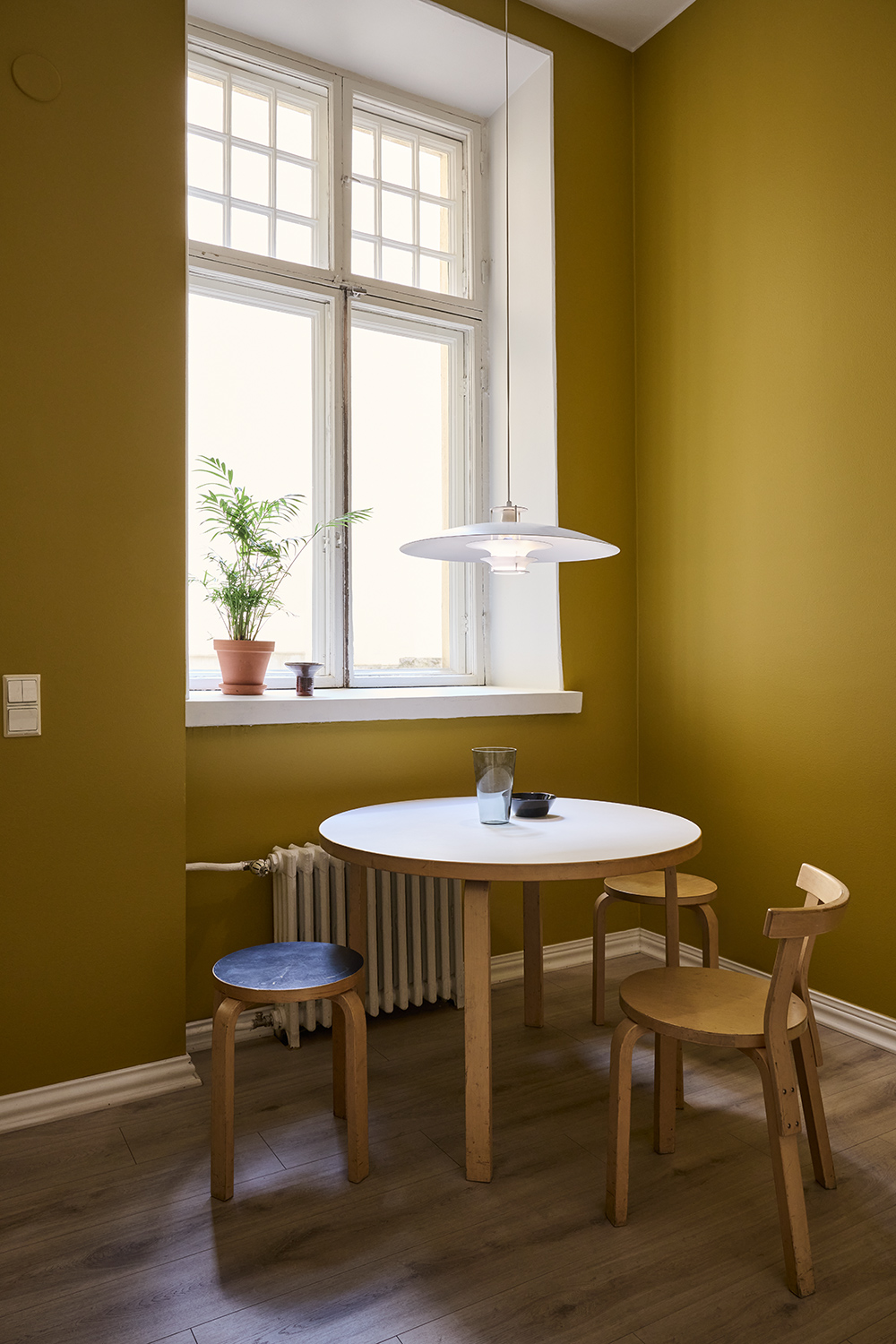
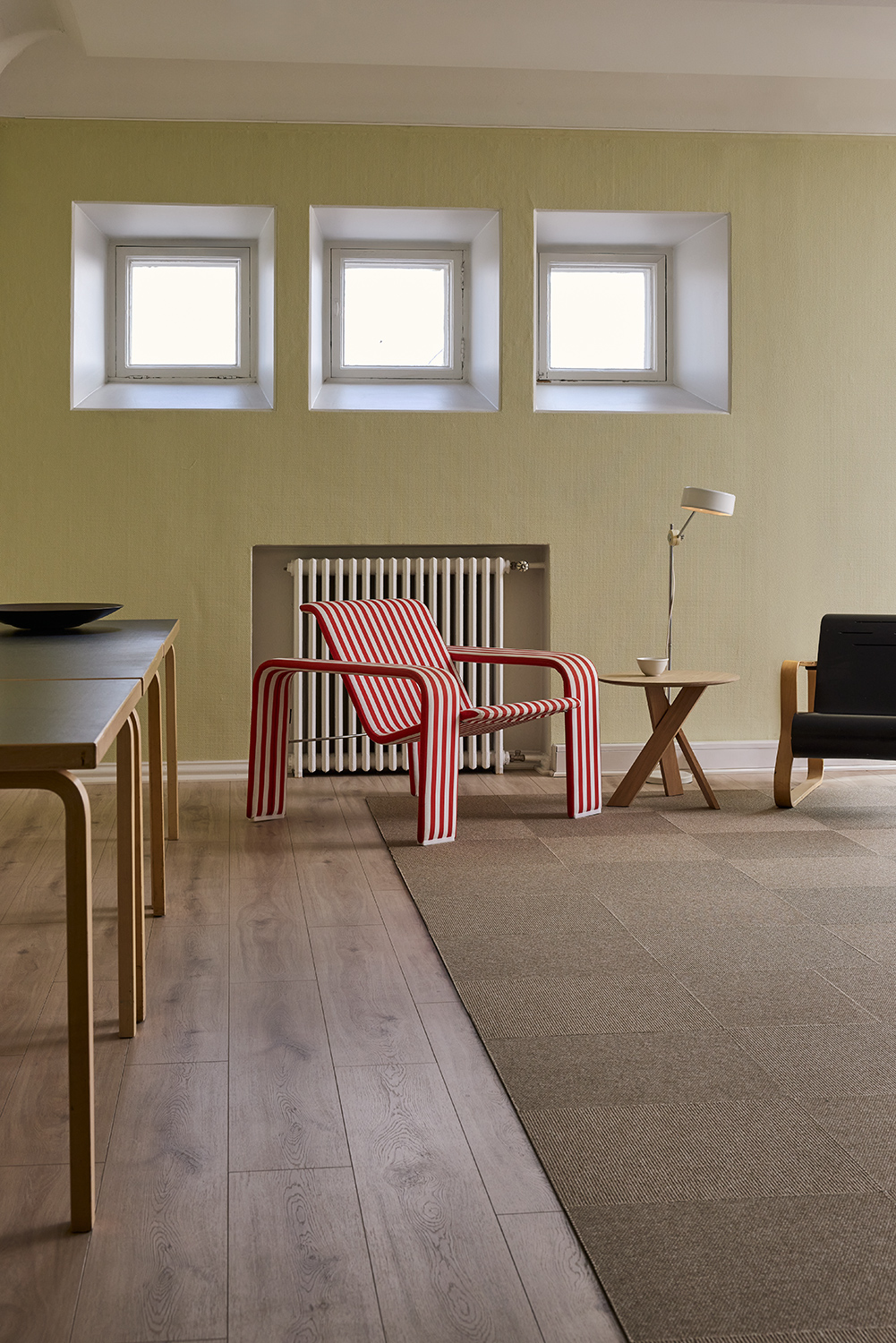
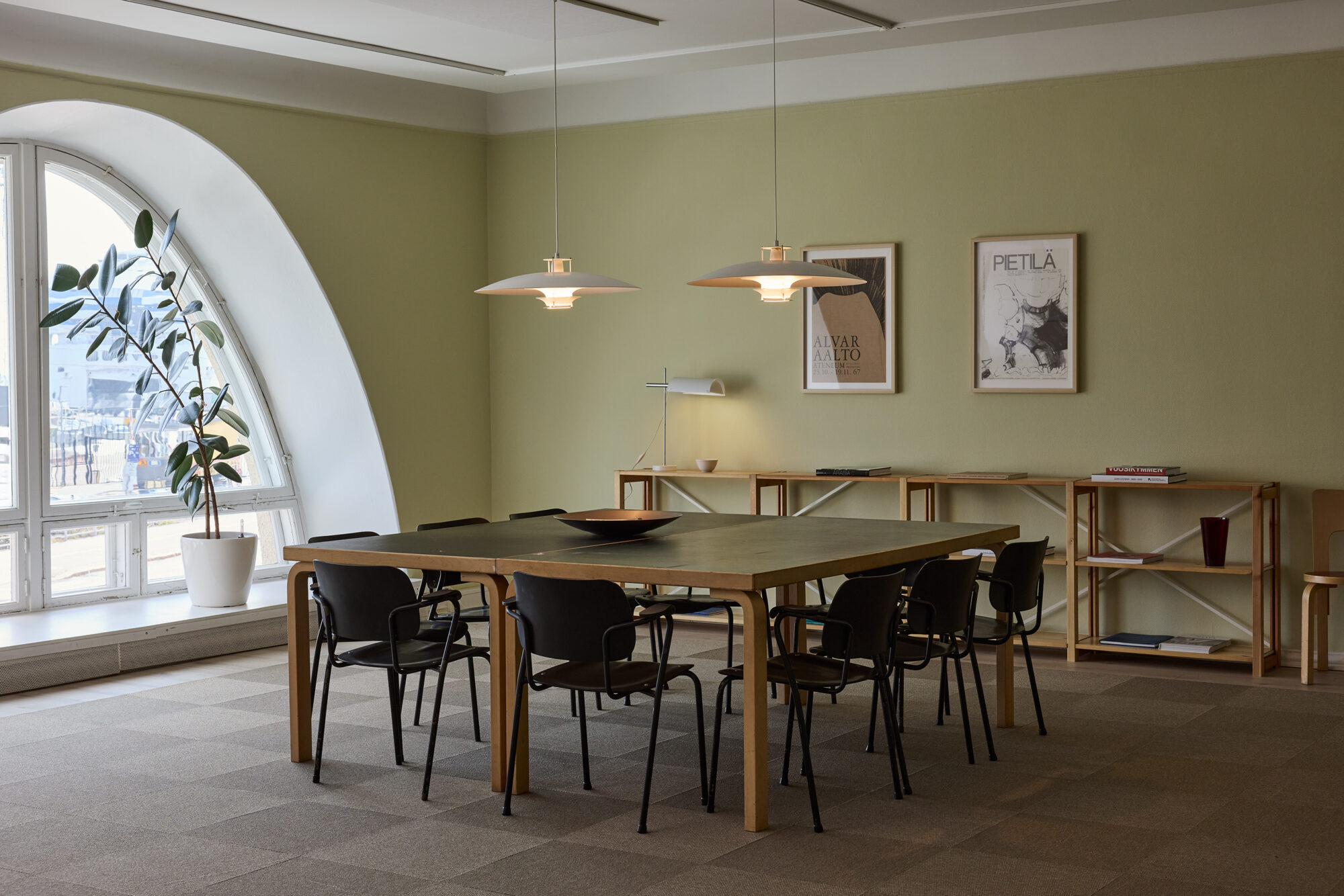
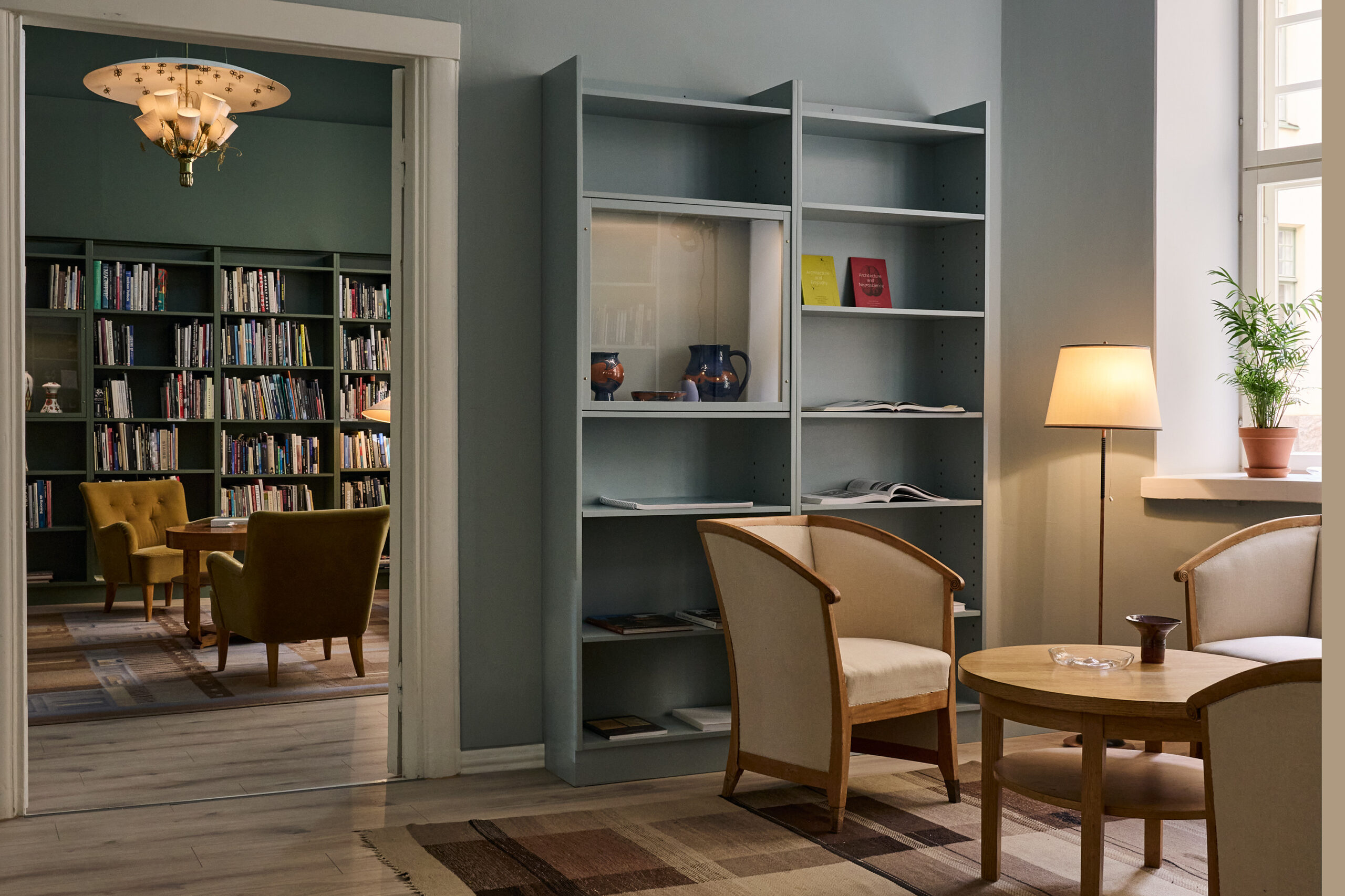
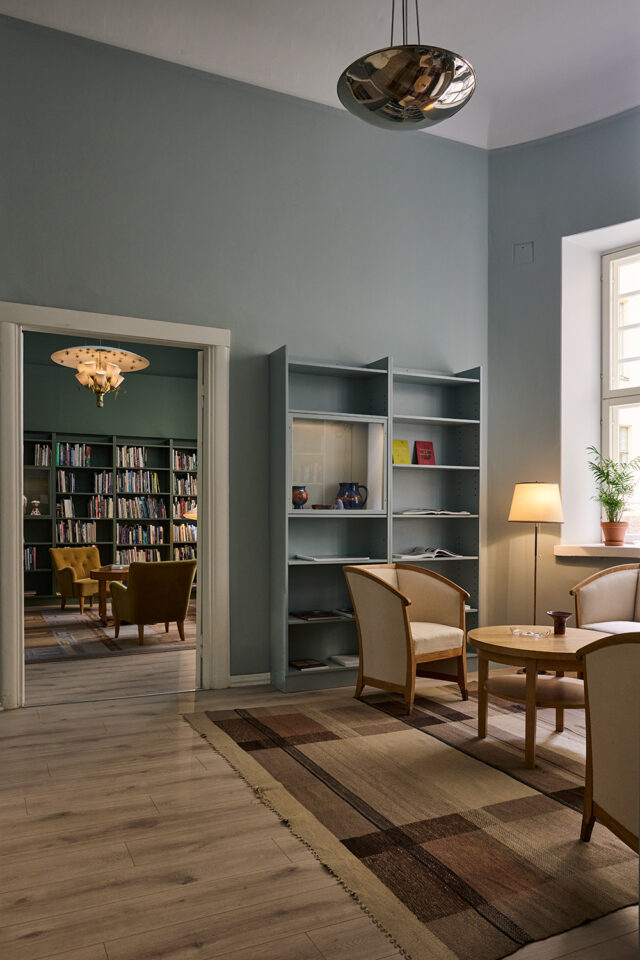
The interior design by Studio Joanna Laajisto has been guided by the principles of the circular economy: preservation, minimal demolition, and reuse. Only minor alterations were made to the historic apartment, while signs of wear and details previously regarded as imperfections have been embraced as part of the space.
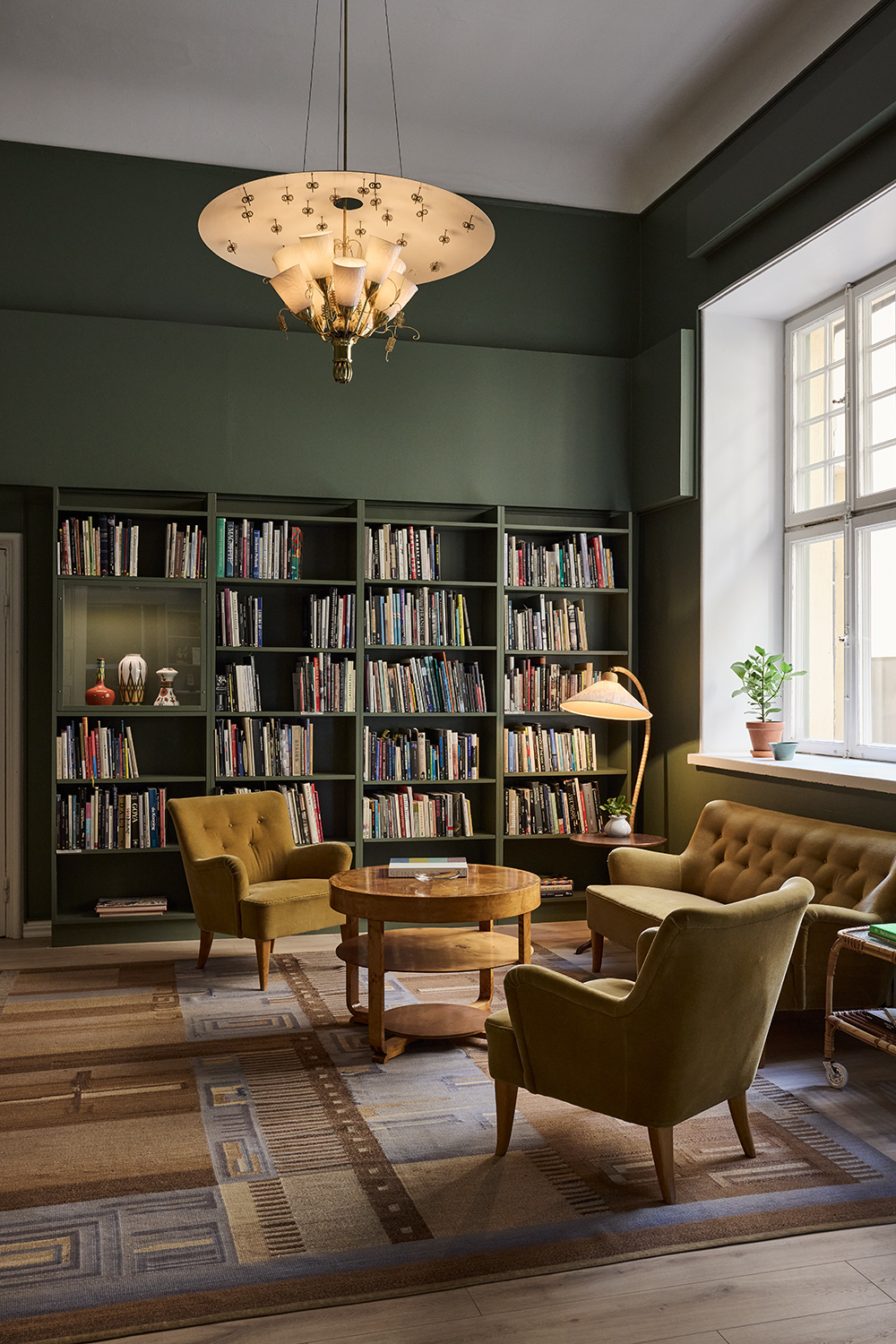
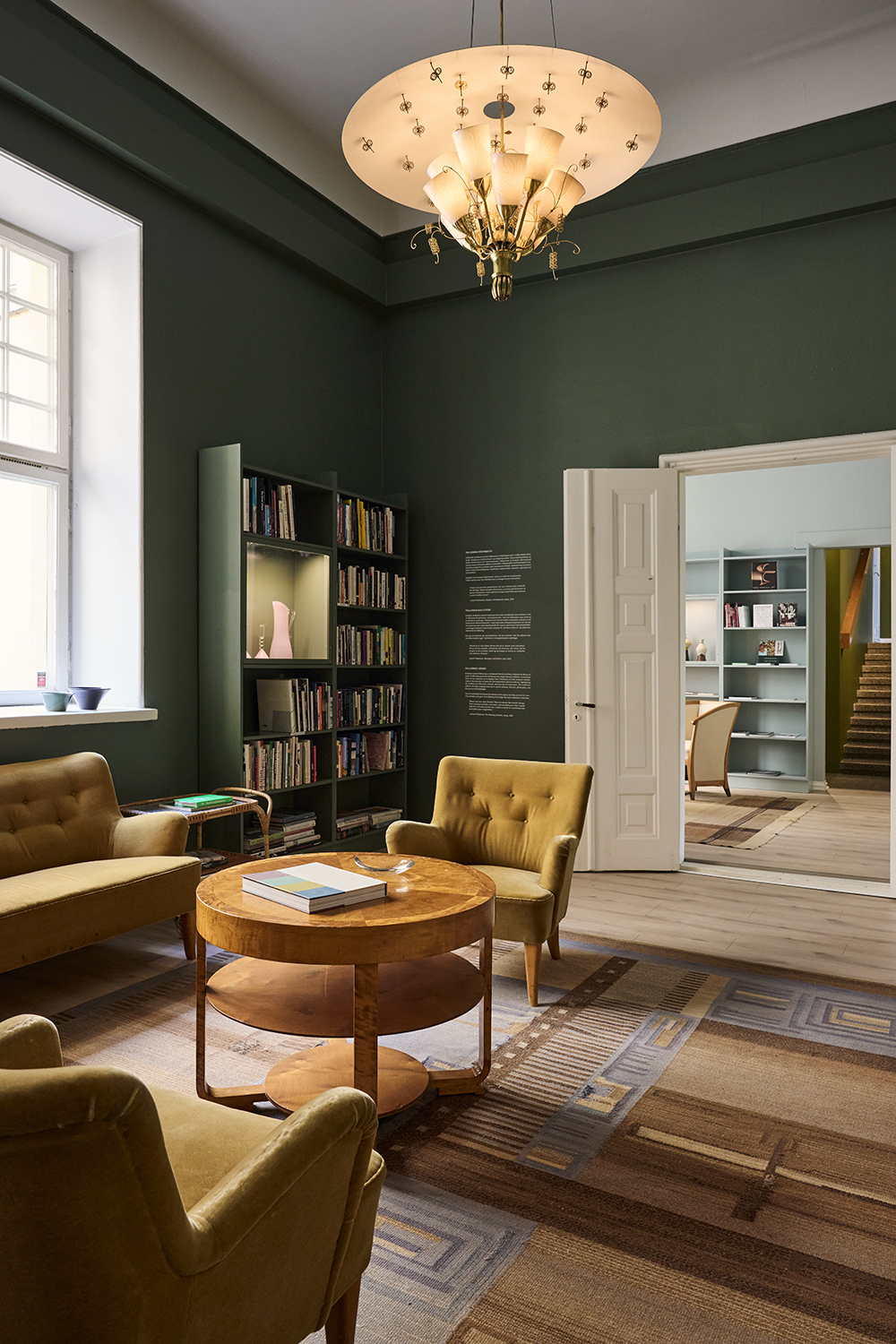
Under Joanna Laajisto’s direction, each of the three floors has been given a distinct atmosphere. The softly toned event and exhibition spaces on the ground floor lead to a dark, intimate library on the second floor and, further up, to light-filled workshop and meeting spaces.
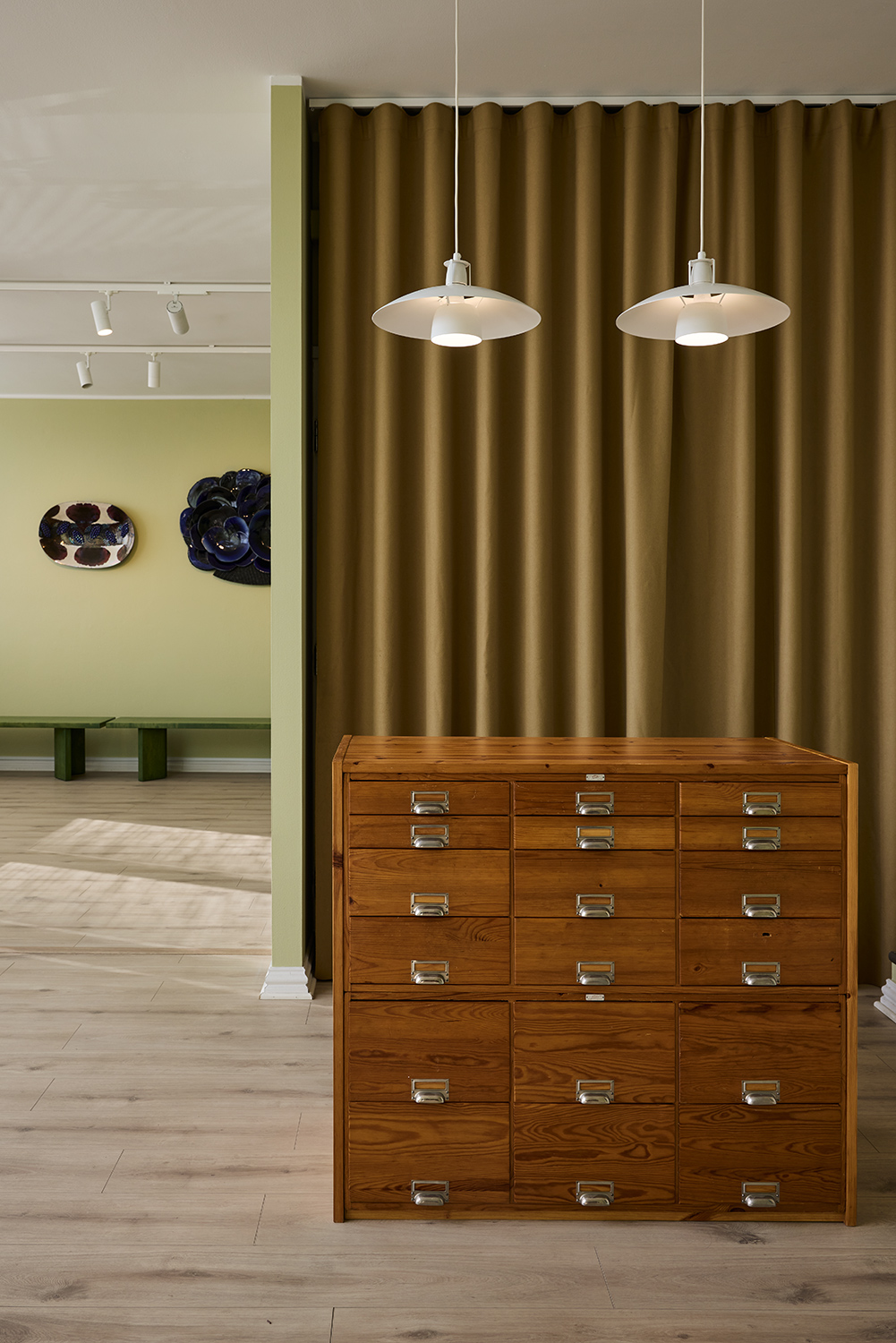
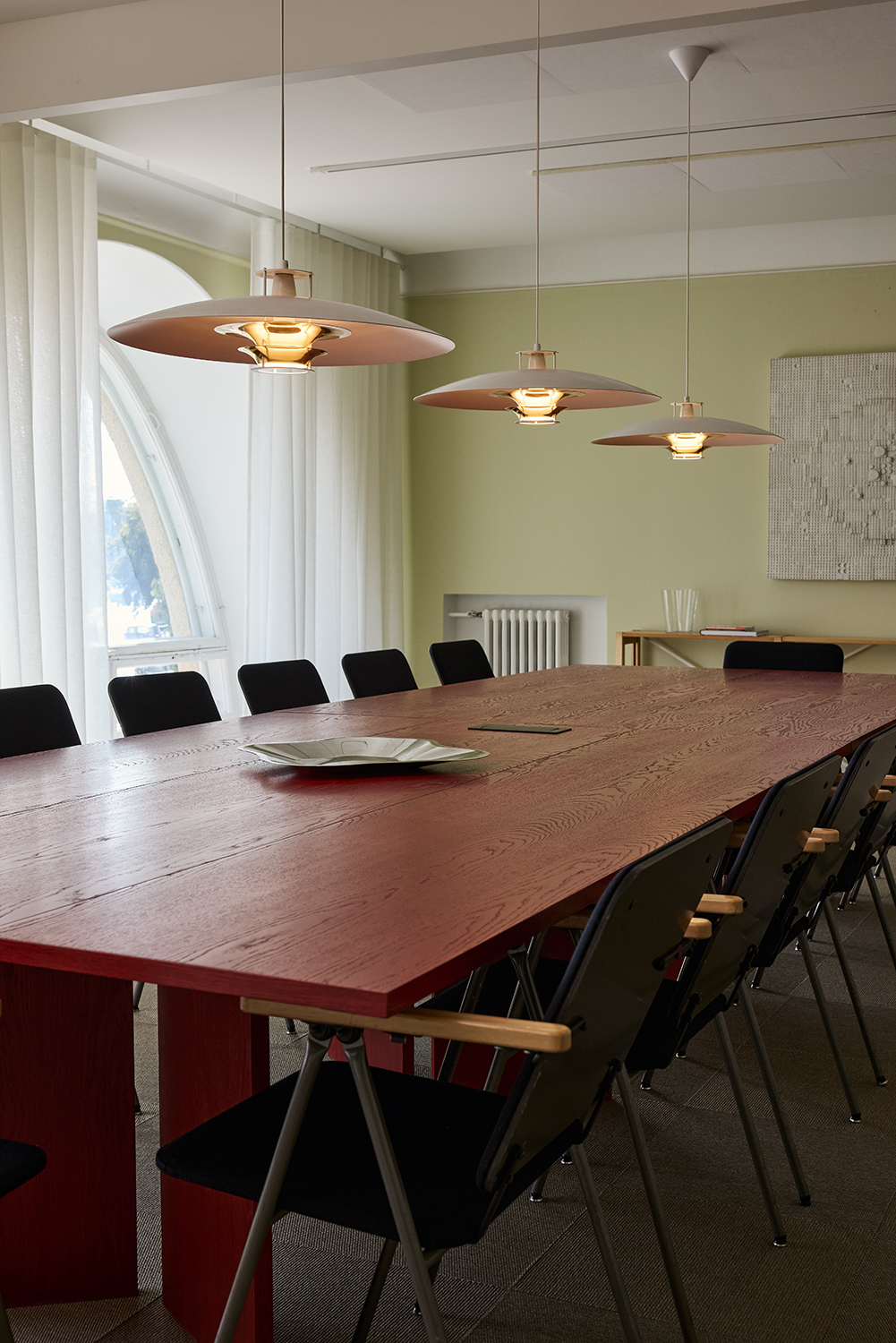
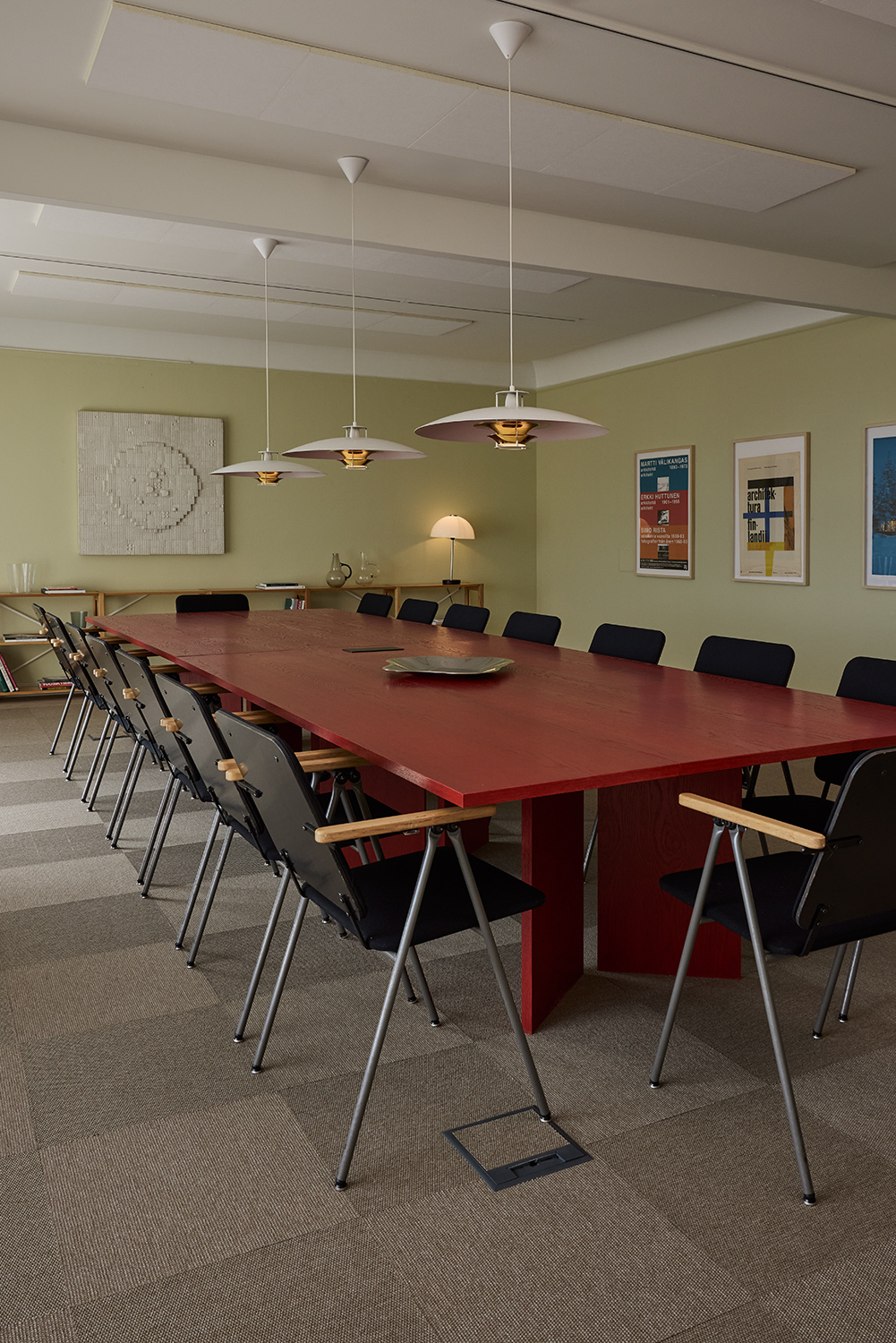
Almost all materials and furniture are reused. Surface materials, such as Ecophon acoustic panels and Ege carpet tiles, have been reclaimed from renovated office spaces and reinstalled. The upstairs curtains are 100% recycled polyester, and the downstairs Kvadrat wool curtain was purchased secondhand.
The interiors feature furniture by leading names in Finnish design, selected from the museum’s study collection as well as numerous online marketplaces and auctions. Selected highlights from the museum’s collections are on display, such as glass objects by Gunnel Nyman, Timo Sarpaneva, Tapio Wirkkala, and Nanny Still, as well as ceramics by Rut Bryk, Kyllikki Salmenhaara, and A. W. Finch. A focal point of the library is a ceiling light designed by Paavo Tynell in 1947 for the Arabia factory building.
Laajisto has also designed new bespoke pieces for the space using materials salvaged from built-in furnishings removed from the former Museum of Finnish Architecture building.
“This project showed that when the client and designer share the same vision, circularity becomes not a constraint but the greatest driver of creativity,” says Joanna Laajisto.